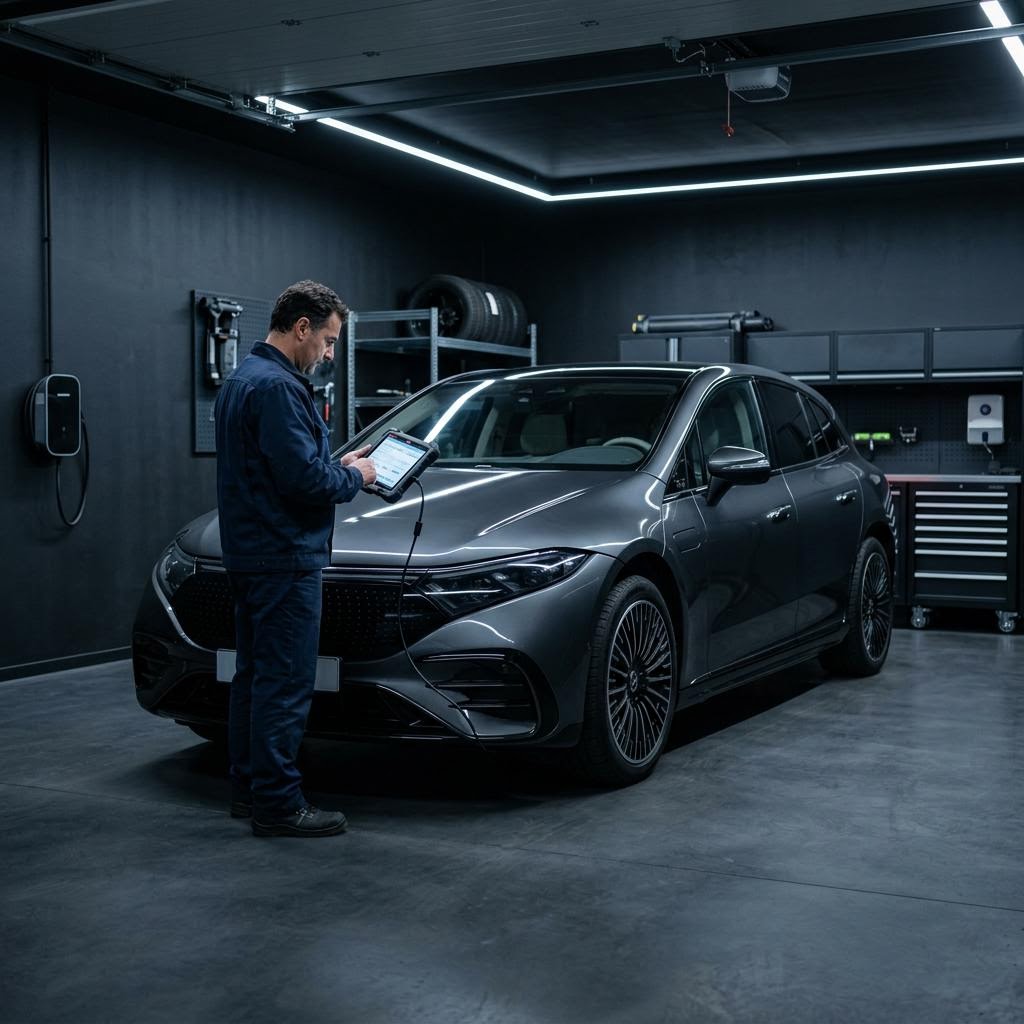
Why a repair can require calibration
Driver-assistance systems measure distances and angles. A forward camera near the mirror, a radar unit behind the bumper cover and ultrasonic sensors in the bumpers all assume they sit in a precise position. Remove and reinstall a bumper, replace a windshield, adjust suspension or straighten structure, and that position can change by a fraction that matters at highway speed.
Manufacturers publish when calibration is required. Some jobs call for it every time a component is removed, others only after specific repairs or when a diagnostic scan shows a fault. We check the vehicle against those requirements and scan before and after repair.
Static, dynamic and combined calibration
Static calibration uses targets placed at set distances in front of or around the vehicle in a controlled space. Dynamic calibration uses a road drive at specific speeds so the system learns from lane markings and traffic. Some vehicles require both. The procedure depends on the vehicle make, model, and the system involved.
Level floors, correct lighting, correct tire pressure and a properly aligned vehicle all affect results, so calibration is part of a sequence, not a standalone button press.
What you should expect afterward
A completed calibration should clear related warning messages and restore the features you had before the accident. If a warning light remains, we diagnose why instead of sending you away. EVs and luxury vehicles often have many sensors, including those used for parking and surround view, and we include them in the check.
Always tell us if you noticed a feature behaving oddly before the crash, so we can separate pre-existing issues from collision-related ones.
Features that rely on calibration
Automatic emergency braking, adaptive cruise control, lane departure warning, lane centering, blind spot monitoring, rear cross-traffic alert, surround view cameras and automatic parking aids can all depend on calibrated sensors. Not every vehicle has all of them, so list what yours has.
A warning light is not the only sign of trouble. A system that works but with a slight offset may not warn you at all. This is why we scan before and after repair, not just when a light is on.
After calibration, test the features in safe conditions, and tell us if anything seems odd.
Tell us about changes made before the accident
A replacement windshield, altered suspension height, different wheel sizes or previous alignment work can be relevant to a calibration discussion. Note when those changes occurred and whether warning lights appeared before or after the collision. Driver-assistance systems have operating limits even when they are working correctly. Clear weather, visible road markings and clean sensor areas can affect performance. Keep following the vehicle manual and remain responsible for braking, steering and observation; calibration does not make a vehicle autonomous or remove those limits.
What to gather before your visit
- List driver-assistance features your car has
- Note any warning messages before or after the collision
- Mention windshield replacement or recent alignment
- Tell us if sensors were exposed to impact
- Share the vehicle year, make and model for procedure lookup
How a repair works with us
- Get your estimateSend photos with our short form, call us, or book a time to bring the car in. The estimate is free.
- We handle the claim paperworkWe talk to your adjuster, document damage with photos and send supplements when hidden damage appears.
- Repair and refinishStructure, panels, sensors and paint are repaired in the right order, and we update you along the way.
- Delivery and walkthroughWe go over the finished work with you in daylight, including your paint warranty terms.
Your insurance, your shop
New Jersey law gives you the right to choose your repair shop. We are an independent shop, with no insurer affiliation or referral-program participation. We work with and directly bill all insurance companies. Read more on our insurance page. Paint work we perform carries a lifetime warranty on paint work only; see the warranty page.