Repair or replace: how the decision gets made
Not every damaged panel should be repaired and not every one should be replaced. A shallow crease on a steel door can usually be worked back to shape with a thin skim of filler. A panel that has been stretched, kinked across a body line or torn at its mounting points often costs more to straighten than to replace, and a replacement may fit better.
Aluminum and high-strength steel panels follow different rules. Some cannot be heated or re-formed the way mild steel can. We look at the material, the shape of the damage and the cost to you or your insurer, then recommend the option that gives a durable result.
Where panel work goes wrong
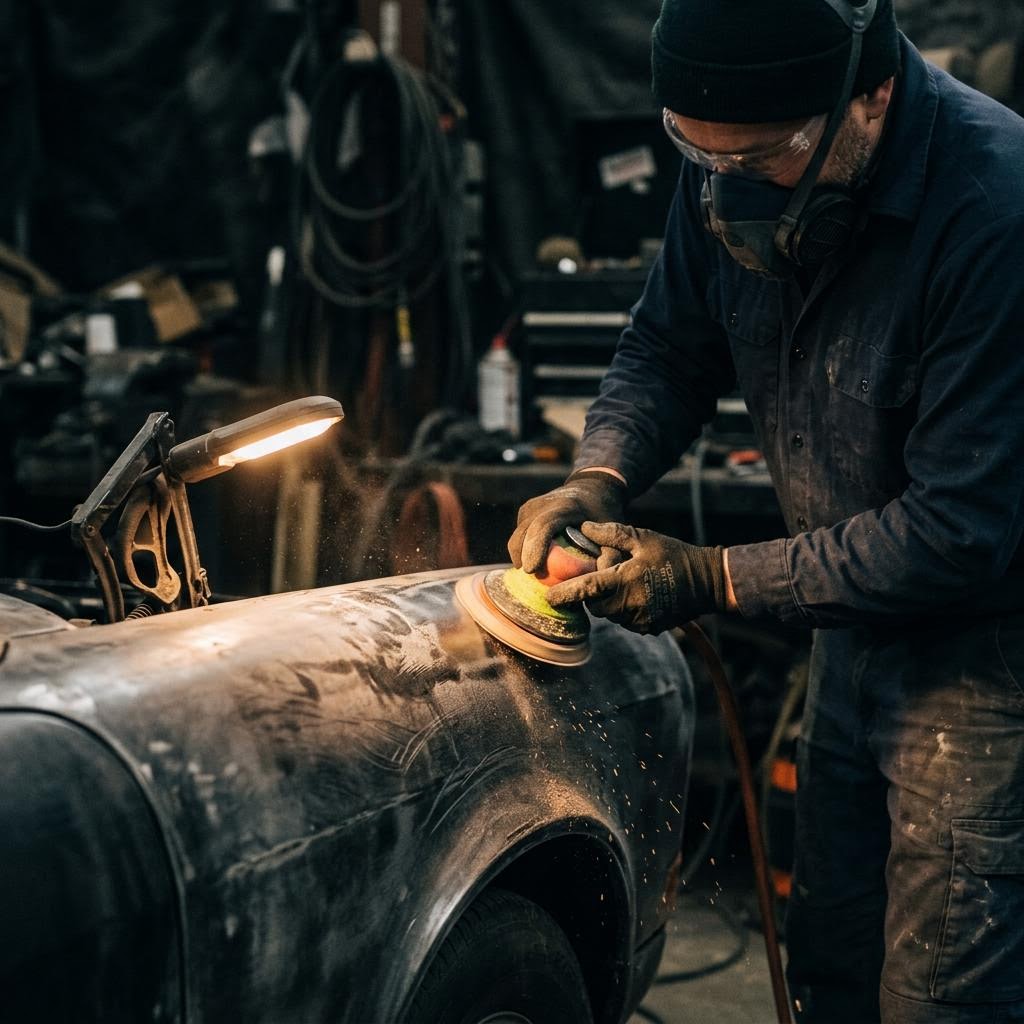
The common failure is thick filler used to hide poor metalwork. It shrinks, cracks and shows as outlines in the paint months later. Good body work gets the metal as close to final shape as possible, uses filler only as a thin final leveler, and checks the surface by hand and under light before any primer goes on.
Fit matters as much as shape. A repaired fender that is perfectly smooth but sits a few millimeters off the hood edge still looks wrong. We test-fit panels, adjust hinges and mounts, and check gaps against the opposite side of the vehicle before refinishing.
After the repair
Once panels are straight and fitted, they move into the paint process, including color matching to your existing finish so the repaired area blends with the rest of the car. Our lifetime warranty covers paint work only, so ask us what that means for your particular repair before you approve it.
Small damage that deserves attention
A scratch that reaches bare metal will rust, and rust under a repair spreads quietly. Door edges, wheel arches and the lower rocker area are the usual starting points in New Jersey winters, where road salt does its slow work. Fixing small damage early costs far less than cutting out corrosion later.
Minor fender benders can also loosen mounting clips and brackets. If a panel rattles or flutters at speed after a bump, have it looked at before the movement cracks the paint around it.
You can send photos with a free estimate request, and we will tell you whether a visit is needed.
A panel can affect more than appearance
A door that needs an extra push to latch, a trunk that collects water or a hood that sits unevenly deserves attention after an impact. Small changes in fit can reveal damage beyond the surface dent. Describe these changes at your estimate, even if they do not photograph clearly. Comparing both sides of the vehicle can help you explain what looks different, but avoid forcing a panel closed or adjusting a latch yourself before it is inspected.
What to gather before your visit
- Note which panels are damaged and any gaps you noticed
- Photograph each side of the car in daylight
- Mention prior repairs, if any, so we can plan around them
- Tell us if the vehicle has aluminum panels
- Bring your insurance information if filing a claim
How a repair works with us
- Get your estimateSend photos with our short form, call us, or book a time to bring the car in. The estimate is free.
- We handle the claim paperworkWe talk to your adjuster, document damage with photos and send supplements when hidden damage appears.
- Repair and refinishStructure, panels, sensors and paint are repaired in the right order, and we update you along the way.
- Delivery and walkthroughWe go over the finished work with you in daylight, including your paint warranty terms.
Your insurance, your shop
New Jersey law gives you the right to choose your repair shop. We are an independent shop, with no insurer affiliation or referral-program participation. We work with and directly bill all insurance companies. Read more on our insurance page. Paint work we perform carries a lifetime warranty on paint work only; see the warranty page.