Can I Choose My Own Body Shop in New Jersey?
Shortly after a collision, most drivers get a phone call or a text from their insurance company that includes a suggestion about where to take the car. It is usually friendly and it sounds official. It is also the moment when many people wonder whether they actually have a say. In New Jersey, you do. This article explains what that means in plain terms, where the limits are, and what to do when the conversation gets confusing.
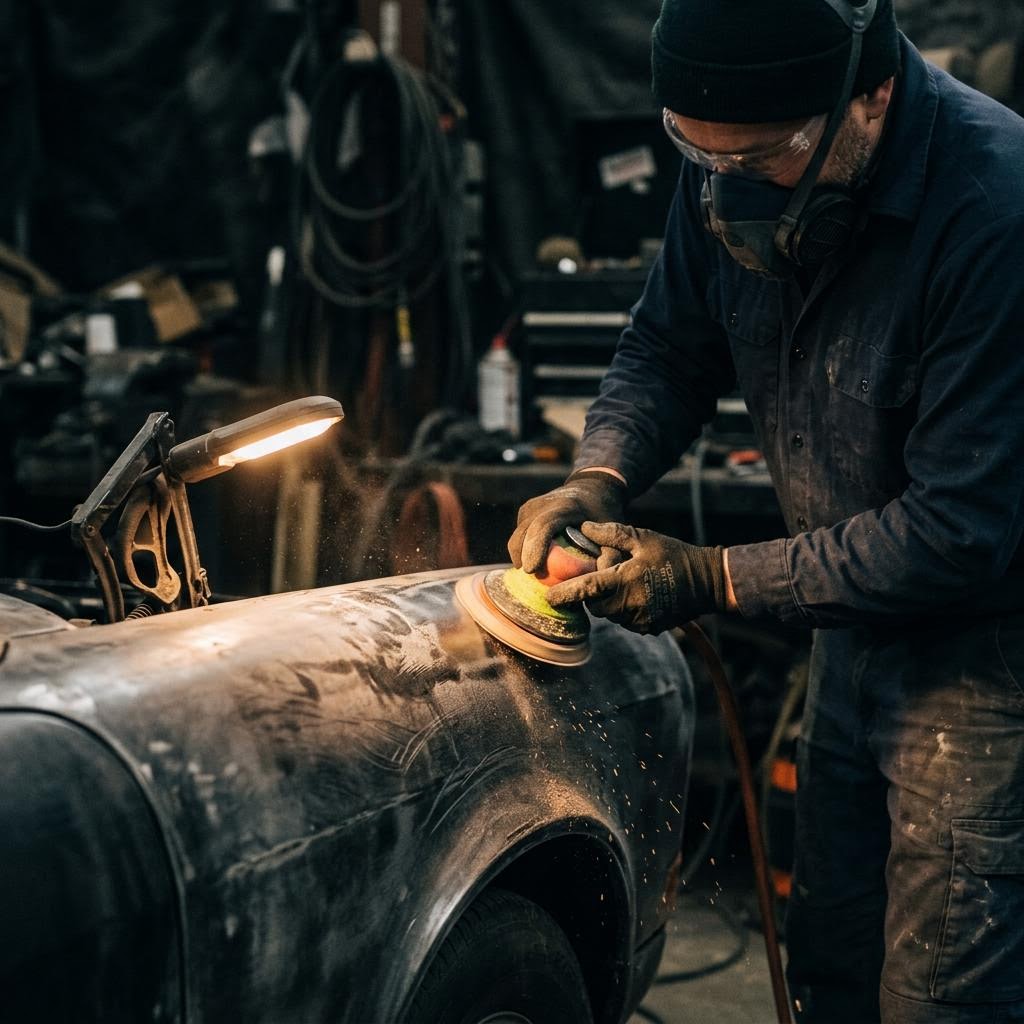
Illustrative image, not a photo of our shop.
By Proline Collision Center · Published
The short answer, and where it comes from
The New Jersey Department of Banking and Insurance has consumer information on auto claims. Choosing a licensed repair shop is the driver's right. Your insurance company cannot make that decision for you.
The same page describes the other side of the arrangement. Once you choose a licensed shop, the insurer is expected to try to reach an agreed price with that shop. That is a negotiation about the cost of repairs, not a veto over your choice. We link the state page at the bottom of this article so you can read the wording yourself.
What your insurer may say on that first call
Insurers can, and often do, mention shops they are familiar with. That in itself is not improper, and for some drivers it is genuinely convenient. The problem starts when a suggestion is presented as a requirement, or when the way it is phrased makes you feel the claim will go slower or worse if you decline. A suggestion is information. It does not change your rights.
You may also hear that using a particular shop will speed up the claim, or that the insurer will only pay what its own estimate says. Sometimes there is a practical truth inside those statements, such as a faster first estimate when the insurer already knows a shop's process. But speed of paperwork and your right to choose are separate things. You can politely say that you have chosen your own licensed shop and ask the adjuster what they need from that shop to move the claim forward.
A sample of what the call can sound like
Here is an illustration, written by us to show the pattern. It is not a quote from any customer or any insurer. The adjuster might say: "We have a few shops we work with regularly, and it would probably be quickest if you took the car to one of them." A calm reply is: "Thank you. I have chosen a licensed shop myself. What do you need from them to start the estimate?"
If the adjuster pushes, you can ask a second question: "Can you tell me in writing what difference, if any, this makes to my coverage?" You are asking for the position to be documented. If it does not, you can contact the state insurance ombudsman office, whose page is listed in our sources.
Permission is not a blank check
Choosing your shop does not mean the insurer must pay whatever that shop writes down. Your policy still decides what is covered, what your deductible is, and what the limits are. The insurer will review the shop's estimate, and it may question line items, labor times or parts choices. That review is normal. The state guidance describes it as an effort to agree on a price, which means there can be back and forth.
A good estimate lists damage clearly, supports each operation with photos and notes, and explains why a repair step is needed. When the insurer and the shop disagree on a line, the documentation is what settles it. A shop cannot promise that the insurer will agree with every item, and any shop that promises that is overselling.
Your own claim versus a third-party claim
It matters whose policy is paying. If you file under your own collision coverage, you generally deal with your insurer, you pay your deductible, and the questions above apply directly. If you are making a claim against the other driver's insurer, the process can look different: that company is evaluating its own insured's responsibility, and timing and documentation requirements may differ.
We cannot tell you which route is right for you, because it depends on your policy, the circumstances of the accident, and what the insurers decide. What we can say is to confirm with your insurer which coverage applies before you assume anything. Ask the adjuster whether the claim is being handled under your collision coverage or against another party's policy, and write down the answer, the date and the name of the person who gave it.
Parts and price differences
Another common friction point is parts. The state guidance notes that aftermarket parts are allowed in New Jersey when they carry a warranty and are of like kind and quality. It also says you do not have to accept a non-OEM part, but if the original manufacturer part costs more, you may be asked to pay the price difference. That is a financial decision worth making with the numbers in front of you.
For this article the key point is that your right to choose the shop and your decision about parts are two separate conversations. Ask for the parts list on the insurer's estimate and for the shop's estimate, and compare them line by line.
When the repair finds more damage: supplements
Almost every collision repair has a moment when the car is taken apart and more damage shows up behind the bumper cover or under a panel. The shop documents it with photos and sends the insurer a supplement request. The insurer reviews it and, if it agrees, adds it to the approved scope.
The practical advice is to ask your shop how it will tell you when a supplement is submitted, and to ask your adjuster who handles supplements and how fast they usually respond. A shop that keeps you updated, and tells you plainly when it is waiting on the insurer, saves you a lot of guessing.
If you pay part of the bill yourself
Sometimes the shop and the insurer cannot agree, or the insurer will pay for a cheaper repair method than the shop recommends. In that situation you may be asked to decide whether to pay the difference out of pocket. This is a payment dispute, and it is a legitimate decision for you to make, but it should be made with the facts in hand: what the insurer will pay, what the shop recommends, and why they differ.
Ask for both positions in writing. If the difference concerns safety, such as how a structural part is repaired or whether a sensor is recalibrated, ask the shop to point to the vehicle manufacturer's repair information. If you are unsure whether a dispute is being handled properly, the state ombudsman office exists for consumer questions. This is general information and not legal advice; for a legal question, speak to an attorney.
A short checklist before you decide
First, confirm which coverage applies and what your deductible is. Second, choose a licensed shop you are comfortable with and tell the adjuster plainly. Third, ask for the insurer's estimate and the shop's estimate in writing and compare them. Fourth, ask how supplements and parts differences will be communicated. Fifth, keep a simple log of dates, names and what was said.
Proline Collision Center is an independent shop in Garwood. We work with and directly bill all insurance companies, and we are happy to look at your estimate, explain the line items and talk through your coverage with you. If you want to start with a free estimate, or you just want to understand where you stand before you decide, we are glad to help.
Sources
General information, not legal or insurance advice. Your policy and your insurer determine coverage.
Related services and guides
Keep reading
OEM vs Aftermarket Parts After an Accident: What to Ask
New OEM, aftermarket, recycled and remanufactured parts are not the same thing. Learn the differences, what New Jersey says, and what to ask your adjuster.
Why ADAS Calibration May Matter After a Collision
Cameras, radar and parking sensors depend on precise aim. Learn when a repair may require calibration, what a scan does and does not do, and what to ask.
Hit something? Start here.
Free estimate, no pressure. Our accident line is answered 24/7.