OEM vs Aftermarket Parts After an Accident: What to Ask
When you open your repair estimate, you will often see small abbreviations next to each part: OEM, A/M, LKQ, reman. They look like shop shorthand, but they describe real decisions about what goes onto your car. This article explains the main categories in plain language, what New Jersey guidance says about them, and the questions that are worth asking before the repair begins.
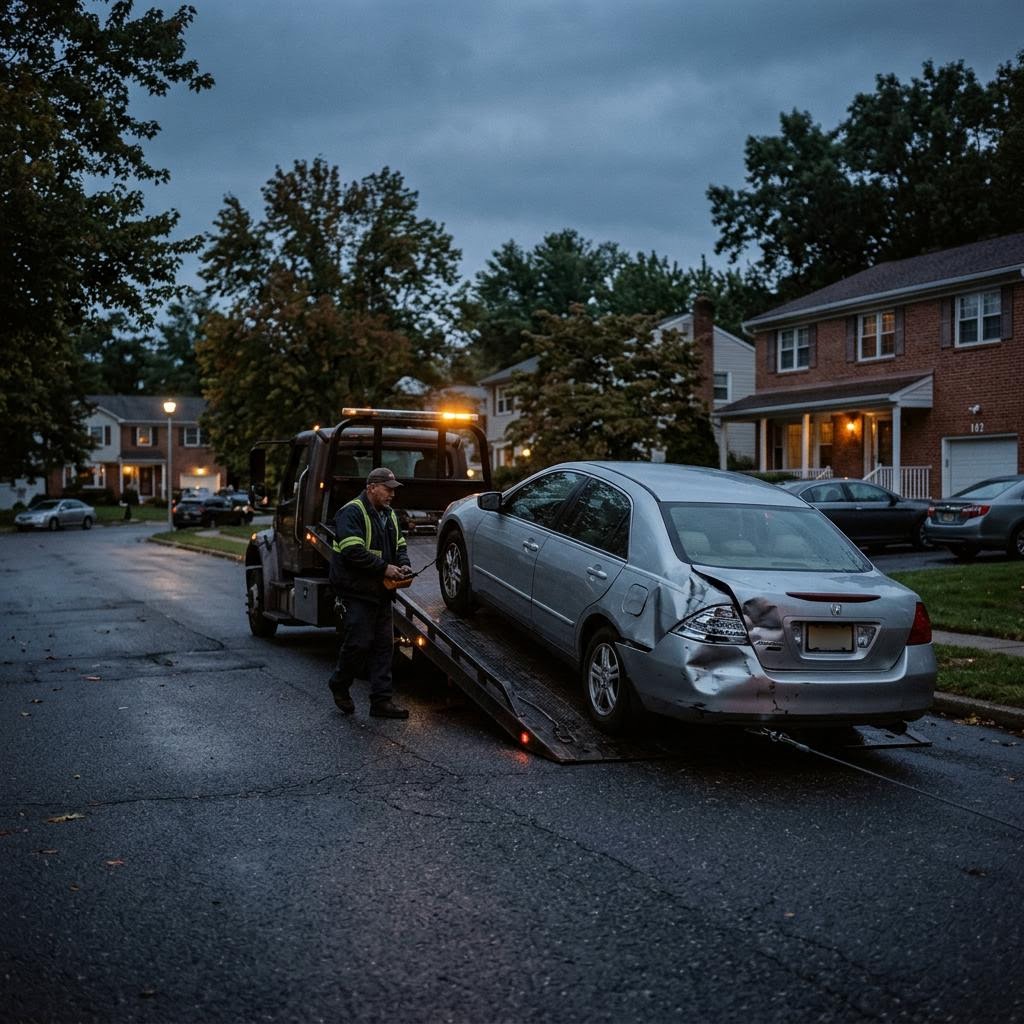
Illustrative image, not a photo of our shop.
By Proline Collision Center · Published
Four kinds of parts, four different answers
Parts on a collision estimate usually fall into four groups. New OEM parts are made by or for the vehicle manufacturer and sold as new original equipment. Aftermarket parts are new parts made by a different company to fit your model. Recycled OEM parts, sometimes called used or salvage parts, are original parts taken from another vehicle. Remanufactured parts are used parts that have been rebuilt or refinished to a specified standard.
Lumping these together as "OEM versus cheap" hides most of what matters. A recycled original fender may fit as well as a new one, and an aftermarket part from a reputable maker may be perfectly fine on some panels. On other parts, fit and function can differ more. The right question is rarely which category is good or bad, but which specific part is being proposed for which specific repair.
What New Jersey guidance says
The New Jersey Department of Banking and Insurance has consumer information on auto claims. According to the department's guidance, aftermarket parts are allowed, provided they carry a warranty and are of like kind and quality. The same guidance says a customer does not have to accept a non-OEM part, but may be asked to pay the price difference if the original manufacturer part costs more.
Two things follow. First, an insurer proposing an aftermarket part is not doing something improper by default. Second, you are not obliged to agree. You can ask for the OEM part and discuss who pays what. Neither of these points tells you what is right for your particular car, which is why the next questions matter. We link the state page in the sources so you can read it directly.
Fit, finish and warranty
Fit is the first practical test. A panel that sits a few millimeters off creates uneven gaps, a hood that does not close cleanly, or a bumper that does not line up with a headlight. These are things your shop will see when the part is test-fitted. A good technician will tell you when a part needs extra work to fit, and that extra labor can change the real cost of a cheaper part.
Warranty is the second test. The state guidance ties aftermarket parts to a warranty, so ask what warranty comes with the proposed part, who stands behind it and how a claim would work. Warranty terms for parts are set by the part maker or supplier and differ from shop to shop. Separately, our own warranty applies to paint work only, and we do not extend it to parts supplied by anyone else.
Where parts matter most: safety and sensors
Some parts do more than cover metal. Bumper reinforcements, crash absorbers, structural members and bumper covers that hold radar or camera brackets all play roles in how the car protects you or how its driver assistance systems see the road. For these parts, ask whether the proposed part is designed to the same specification as the original and whether the vehicle manufacturer's repair information calls for a specific part.
This is not a reason to panic, and we are not claiming that aftermarket parts are unsafe in general. It is a reason to ask specific questions when the part sits in front of a sensor or forms part of the crash structure. Bring the question to both the insurer and the shop. If the answer is "it is equivalent", ask what that is based on, and ask for it in writing.
Availability changes the plan
Even when you want a new OEM part, availability varies. Some parts are in stock at a distributor and arrive the next day. Others are backordered, discontinued for an older model, or available only from the manufacturer on a longer timeline. Newer vehicles and lower-volume models often have longer waits. A recycled or aftermarket part may be the only practical way to get a car on the road by a certain date.
That is a legitimate tradeoff, and it should be yours to make with accurate information. Ask your shop which parts are available now, which are on order and what the expected arrival dates are. If waiting for an original part means a longer rental period, ask your adjuster how rental coverage works for your policy, because the answer depends on your coverage.
Whose policy decides, and what endorsements might do
Your policy can change the answer. Some policies include an endorsement that addresses the type of parts used, and some do not. Coverage on your own claim can be different from a claim against another driver's insurer. Rather than guess, ask your insurer which parts language applies to your policy, whether any endorsement is in place and how it affects this repair.
We cannot read your policy as an insurer would, and we do not promise any outcome. What we do is discuss the estimate, the parts being proposed and the coverage you describe to us, and help you ask clear questions. Proline does not promise that every part on your car will be OEM, and we do not claim a vehicle manufacturer has endorsed our work. We tell you what the estimate says and what we recommend.
The questions to ask your adjuster
Here is a short set you can use. Which parts on the estimate are new OEM, aftermarket, recycled or remanufactured? What warranty comes with each non-OEM part? If I prefer OEM for a specific part, how is the price difference handled under my policy? Does my policy contain any parts-related language? Who do I contact if the part does not fit correctly when it arrives?
Ask for the answers in writing, by email if possible, and keep them with your claim paperwork. If a call is the only option, note the date, the name of the person and what they said. This is not about distrust. Claims involve many people and many handoffs, and a written record saves everyone time if something has to be revisited.
A sample exchange, written as an illustration
To show how this can go, here is an invented exchange, not a quote from anyone. The adjuster says: "The estimate uses an aftermarket bumper cover to keep costs down." A calm reply is: "Thanks. Can you send me the parts list, and tell me what the warranty is on that cover? If I want the OEM one, what would the difference be?"
Notice what that reply does not do. It does not accuse, and it does not refuse anything on the spot. It requests information and keeps your options open. After you have the numbers, you can decide whether the saving is worth it for that part. For a plain cosmetic cover, many people accept an alternative. For a part that carries a sensor bracket, you may choose differently.
What a shop can and cannot do for you
An independent shop can explain the parts on an estimate, point out fit concerns, show you what the vehicle maker's repair information says where it is available and keep the insurer informed through supplements. It can also tell you when it believes a proposed part will cause extra labor. What it cannot do is decide what your policy covers or guarantee that an insurer will agree to a specific part.
If you would like to talk through an estimate, Proline Collision Center in Garwood is happy to review it with you. We work with and directly bill all insurance companies, and we are an independent shop. Bring the insurer's estimate and any parts list you have been given, and we will go through it line by line, explaining what each category means for your car.
Sources
General information, not legal or insurance advice. Your policy and your insurer determine coverage.
Related services and guides
Keep reading
Can I Choose My Own Body Shop in New Jersey?
Yes. In New Jersey the choice of a licensed repair shop is yours. Here is what your insurer may say, what it may not, and how to handle the call.
Why ADAS Calibration May Matter After a Collision
Cameras, radar and parking sensors depend on precise aim. Learn when a repair may require calibration, what a scan does and does not do, and what to ask.
Hit something? Start here.
Free estimate, no pressure. Our accident line is answered 24/7.