Why ADAS Calibration May Matter After a Collision
Many cars on the road today can brake on their own, warn you about a car in the next lane or hold you between lane lines. These advanced driver assistance systems, usually called ADAS, rely on cameras, radar and sensors that need to look in exactly the right direction. After a collision, that direction can change. This article explains when calibration may be part of a repair, in plain terms and without alarm.
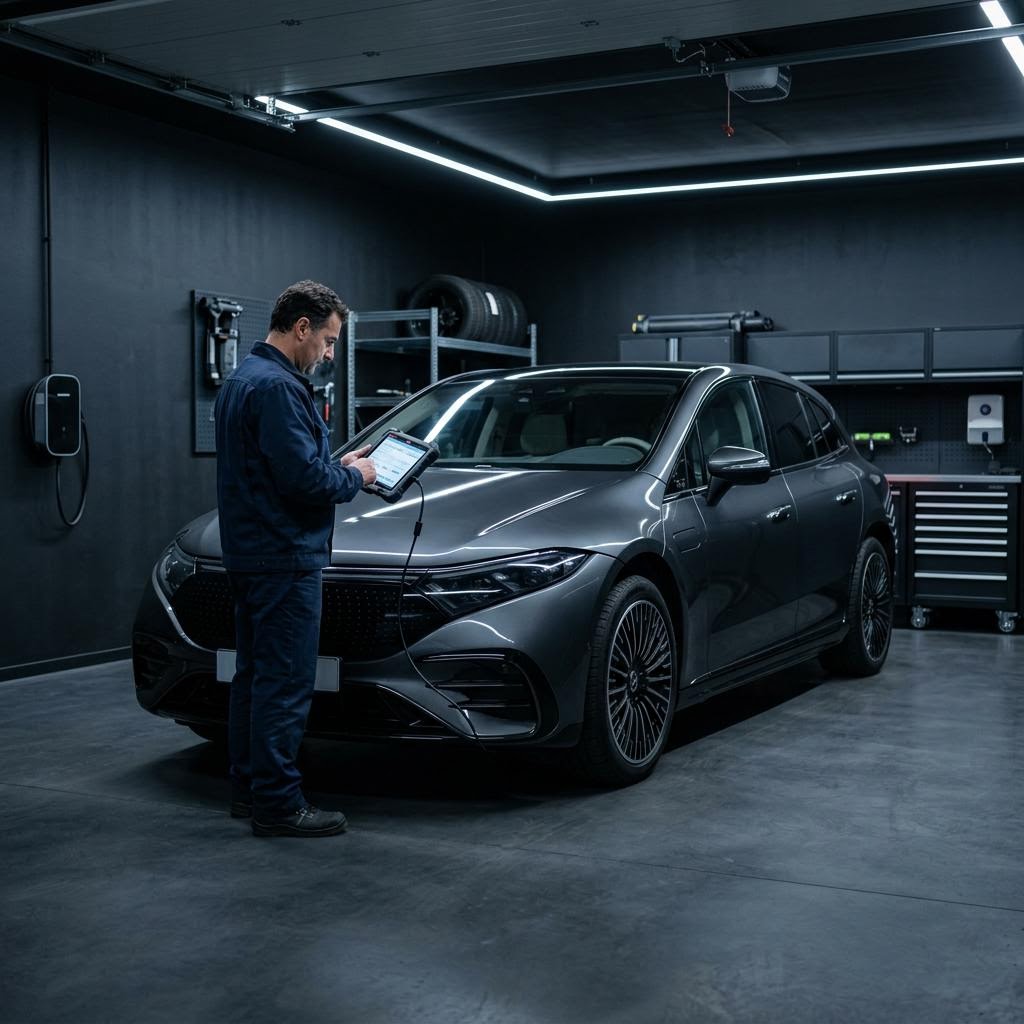
Illustrative image, not a photo of our shop.
By Proline Collision Center · Published
What ADAS actually is
ADAS is a name for a group of safety and convenience features. Examples include forward collision warning, automatic emergency braking, lane departure warning, lane keeping assistance, blind spot monitoring, adaptive cruise control and parking sensors with rear cameras. NHTSA, the federal vehicle safety agency, describes these as driver assistance technologies and maintains a page explaining them for consumers, which is linked in our sources.
The important point is that these systems are assistants. They do not replace the driver, and what they do varies by make, model and year. Your owner's manual describes what your car has and what its limits are. It is worth reading that section, because a feature you assumed was there may not be, and a feature you rely on may have conditions under which it does not work.
Why aim matters
A forward camera behind the windshield works out where lane lines are by its angle of view. A radar unit behind a bumper cover measures the distance to the car ahead by sending a signal in a particular direction. If either unit is rotated or tilted by even a small amount, objects can appear in the wrong place. The system might then see a lane edge that is not there, or miss a vehicle that is.
Calibration is the process of teaching the system its correct aim again, following the vehicle manufacturer's procedure. A AAA research report on the cost of ADAS repairs notes that almost all ADAS sensors need calibration, including precise aiming. We link that report in the sources. We are citing it for that general principle only and not for any numbers, which depend on the vehicles and shops involved.
Repairs that may call for calibration
Not every repair does. Calibration may be required when a sensor or its mounting is disturbed, when a part that holds a sensor is replaced, or when the geometry of the car changes. Common triggers include bumper cover removal or replacement where radar sits behind it, windshield replacement when a camera is mounted there, structural or suspension repair that changes the vehicle's alignment, and replacement of a mirror or door that houses a sensor.
The word "may" is deliberate. Whether a given repair needs calibration is set by the vehicle manufacturer's repair information for that make, model and year. A minor cosmetic repair that does not touch a sensor or its bracket may need nothing. A moderate bumper repair on a car with radar behind the cover may. The only reliable way to know is to check the manufacturer's procedures for your vehicle, which a competent shop does as part of repair planning.
A scan is not a calibration
This is the point most often misunderstood. A diagnostic scan reads the car's computers and lists any stored fault codes. A pre-repair and post-repair scan are good practice because they show what the car itself reports. But a clean scan does not prove a camera is aimed correctly. A sensor can be misaligned and still report no fault, because it does not know it is pointing in the wrong direction.
Calibration is a separate step with its own process and its own result. If an estimate or invoice mentions scanning, ask whether any calibration was performed, which systems it covered and whether a report or printout exists. Ask the same question of the insurer if it is questioning a calibration line item. A scan can be an input to the decision, but it cannot replace the procedure itself.
Static, dynamic and what varies by vehicle
You may hear the terms static and dynamic calibration. Static calibration is usually done in the shop with the vehicle in a controlled position, using targets or specified equipment placed at set distances. Dynamic calibration usually involves driving the car under specified conditions, with a scan tool, so the system learns from the road. Some vehicles require one, some the other and some both.
Which method applies depends entirely on the manufacturer. Space, lighting, floor conditions, tire pressure, ride height and road conditions can all matter, and the requirements differ between makes. That is why there is no single universal procedure and why any claim of one-size-fits-all calibration should be treated with caution. If you are curious, ask your shop which procedure the manufacturer specifies for your vehicle.
Windshields, bumpers and structure
Three repairs deserve a special mention. Windshield replacement matters because many forward cameras are mounted on the glass. The camera may need to be recalibrated after a new windshield is installed, depending on the manufacturer. Glass that is not of suitable quality or is mounted slightly differently can change what the camera sees.
Bumper repairs matter because radar units for blind spot monitoring and adaptive cruise often sit behind plastic covers. Paint thickness and bracket position can affect them, so a repaired cover may not be a simple cosmetic matter. Structural repairs, such as straightening or replacing a rail, matter because they can change where a camera or radar points relative to the car's centerline. The more structure involved, the more likely calibration is part of the plan.
Who is responsible for safety
It is natural to ask who is responsible when a system does not work as expected. In the end the driver remains responsible for operating the vehicle, and these features are aids. At the same time, a repair facility has a responsibility to follow the manufacturer's repair information, to document what was done and to be honest about what it can and cannot do in house.
We do not suggest that skipping calibration is the same as an unsafe car, and we do not suggest that completing it is a guarantee of how the system will behave. We do suggest that, if the manufacturer calls for calibration, it should be done and documented, and that you should know who did it. Where a shop sublets a procedure, it should tell you so.
Insurance and the line item
Calibration shows up on estimates as a line item, and it is sometimes questioned by the insurer. Your policy decides what is covered, and an insurer may ask for support for any operation. The best support is the vehicle manufacturer's repair information, along with photos of the damaged area and a note explaining which component was affected.
If a calibration line is declined, ask for the reason in writing and ask your shop to respond with the documentation. If there is still a disagreement, you can decide whether to pay for it yourself, after weighing the information. Nobody should push you into either choice. This is general information and not legal advice, and your policy language is what governs your claim.
Questions to ask your shop
Ask which systems on your car are affected by the repair. Ask whether the manufacturer calls for calibration after it and which type. Ask whether the work is done in the shop or sent elsewhere. Ask what documentation you will receive after the work. Ask what warning lights or behaviors should make you come back. Those five questions will tell you a great deal about how the repair is being planned.
Proline Collision Center in Garwood is an independent shop that works with and directly bills all insurance companies. If you want to talk through whether your repair might involve a camera or radar, we are happy to look at your car and estimate with you. We will tell you what the repair information says for your vehicle and what we recommend, without promising results we cannot control.
Sources
General information, not legal or insurance advice. Your policy and your insurer determine coverage.
Related services and guides
Keep reading
Can I Choose My Own Body Shop in New Jersey?
Yes. In New Jersey the choice of a licensed repair shop is yours. Here is what your insurer may say, what it may not, and how to handle the call.
OEM vs Aftermarket Parts After an Accident: What to Ask
New OEM, aftermarket, recycled and remanufactured parts are not the same thing. Learn the differences, what New Jersey says, and what to ask your adjuster.
Hit something? Start here.
Free estimate, no pressure. Our accident line is answered 24/7.